ぶっこみ釣り(ウナギ)
💧 Fresh🎣 Bait📍 Shore
Light LureMiddle LureMedium-Heavy LureHeavy LureHeavy Rock FishingSurf Castingクロダイスズキウナギ
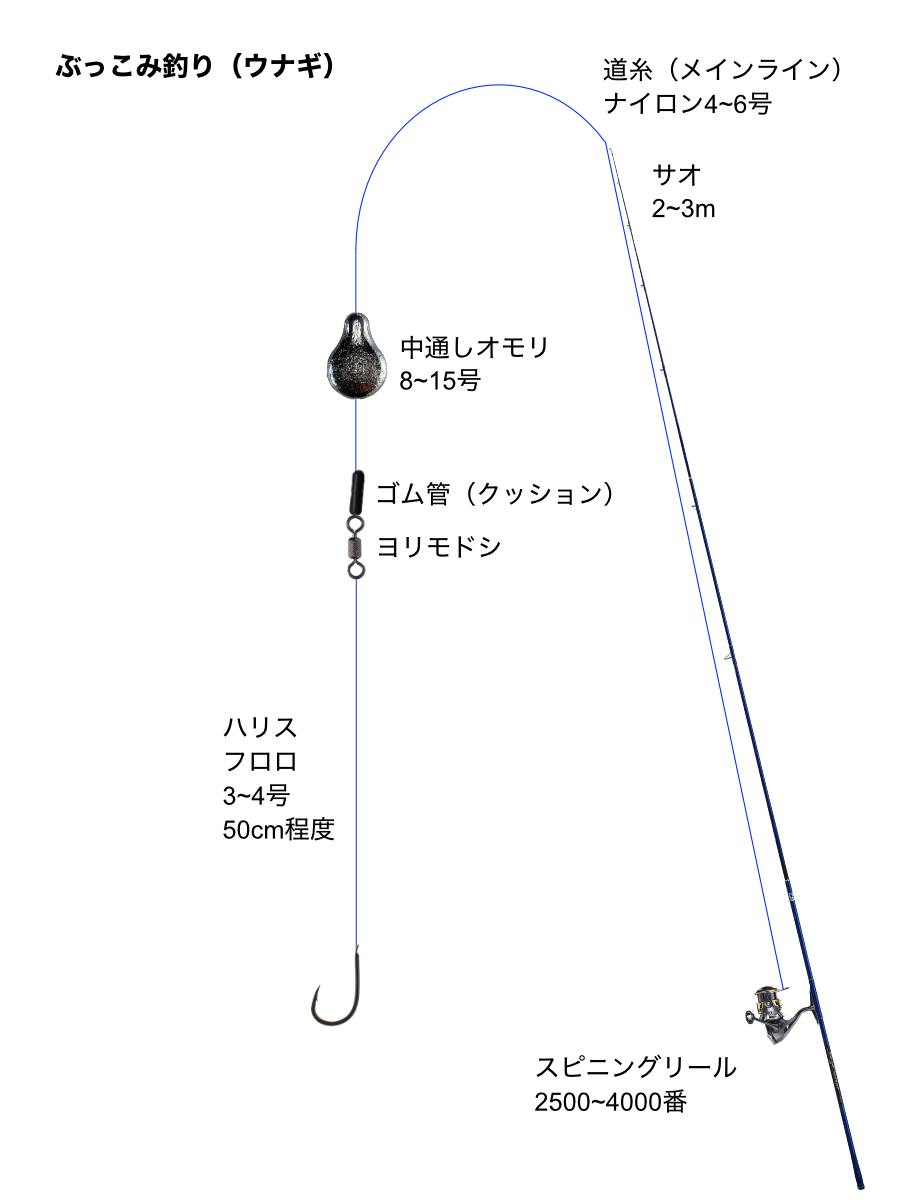
Basic Structure of the Rig
- Rod: Spinning reels in the 2500–4000 size range are common. Various rods can be used, including seabass rods, eging rods, surf rods, and compact rods.
- Line: Nylon line in 4–6号 is standard, with slightly stronger settings preferred for abrasion resistance.
- Sinker: A sliding in‑line sinker (free‑running type) is used to avoid giving the eel any unnatural resistance.
- Leader & Hook: Use about 50cm of fluorocarbon leader around 5号 to keep the bait stable on the bottom. Hooks such as eel hooks (size 12–13) or round seigo hooks are selected based on bait type.
- Bait: Dew worms are the most effective, but freshwater shrimp and small crabs also work well.
Fishing Procedure
- Spot Selection: Good locations include areas with water flow such as floodgates, and around structures like bridge pillars.
- Casting & Waiting: After casting, place the rod on a stand. Attaching a bell or light to the rod tip helps detect bites.
- Bite & Hook‑set: Bites often feel like small “taps.” Do not set the hook immediately—wait until the taps continue and the weight loads onto the rod, then set the hook firmly.
- Landing (Fight): Once hooked, reel steadily and quickly to prevent the eel from diving into rocks or structure.
- Handling After the Catch: Eels are extremely slippery, so a dedicated eel grip is helpful. If keeping the eel for food, it is recommended to purge the mud flavor by keeping it alive in clean water for about a week.
Related Movies
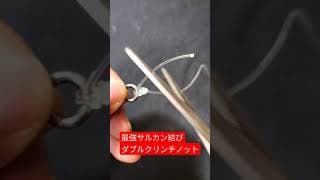
糸とアイの結び方(ダブルクリンチノット)
You have reached the end of the list