バスフィッシング(ベイトタックル)
💧 Fresh🎣 Lure📍 Shore
Light LureMiddle Lureブラックバス
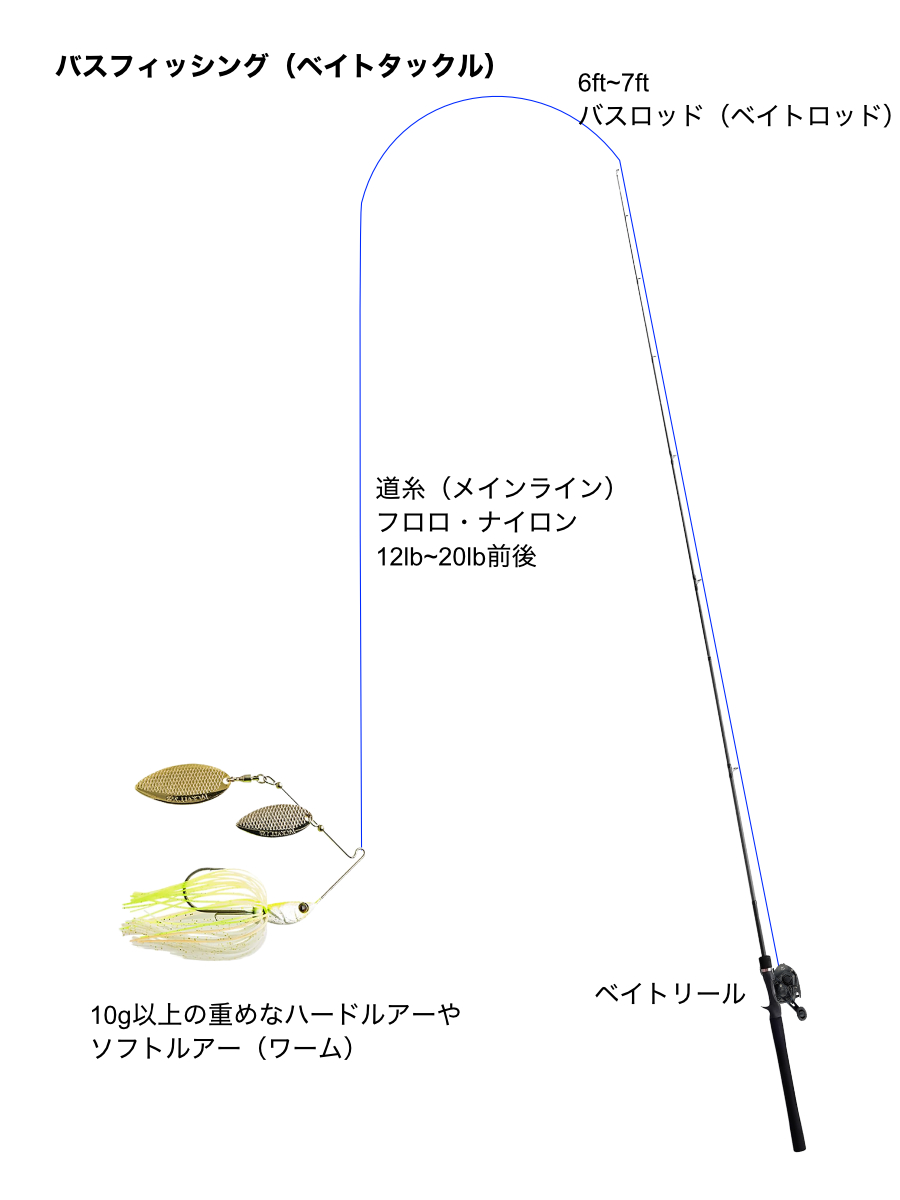
Basic Structure of the Rig
- Rod (Baitcasting Rod): The defining feature is the “trigger”—a small protrusion where your index finger rests when gripping the rod. Standard length is 6–7 feet (about 1.8–2.1m), chosen based on the fishing environment.
- Reel (Baitcasting Reel): The spool rotates to wind the line, offering strong retrieval power and high sensitivity.
- Line: Baitcasting setups handle thicker line (around 12–20lb) better than spinning gear, making them ideal for fishing around heavy cover with fewer line troubles. Fluorocarbon (for sensitivity and strength) and nylon (for flexibility) are commonly used.
- Lures: Heavier lures (10g and above) are easier to cast. Suitable options include spinnerbaits, crankbaits, vibration lures, and rigs using heavier sinkers such as Texas rigs and rubber jigs.
Fishing Procedure
- Brake Adjustment:
Mechanical Brake — Adjust until the spool has no side‑to‑side play (the optimal position).
Magnetic Brake, etc. — Beginners should start with a strong brake setting to prevent backlash, then gradually loosen it to increase casting distance. - Casting & Thumbing:
Disengage the clutch and hold the spool with your thumb. After checking safety around you, cast.
Thumbing (Most Important) — Lightly touch the rotating spool with your thumb during flight to control line release. This prevents backlash at splashdown and allows for a quiet, soft presentation. - Action & Hook‑set:
Use the baitcaster’s power for steady retrieves or rod‑jerking actions to animate the lure. When a fish strikes, use the strong rod and thick line to set the hook firmly and pull the fish in quickly.
Related Movies
糸とアイの結び方(ダブルクリンチノット)

ブラックバス釣り教室
You have reached the end of the list