バスフィッシング(スピニング)
💧 Fresh🎣 Lure📍 Shore
Light LureMiddle Lureブラックバス
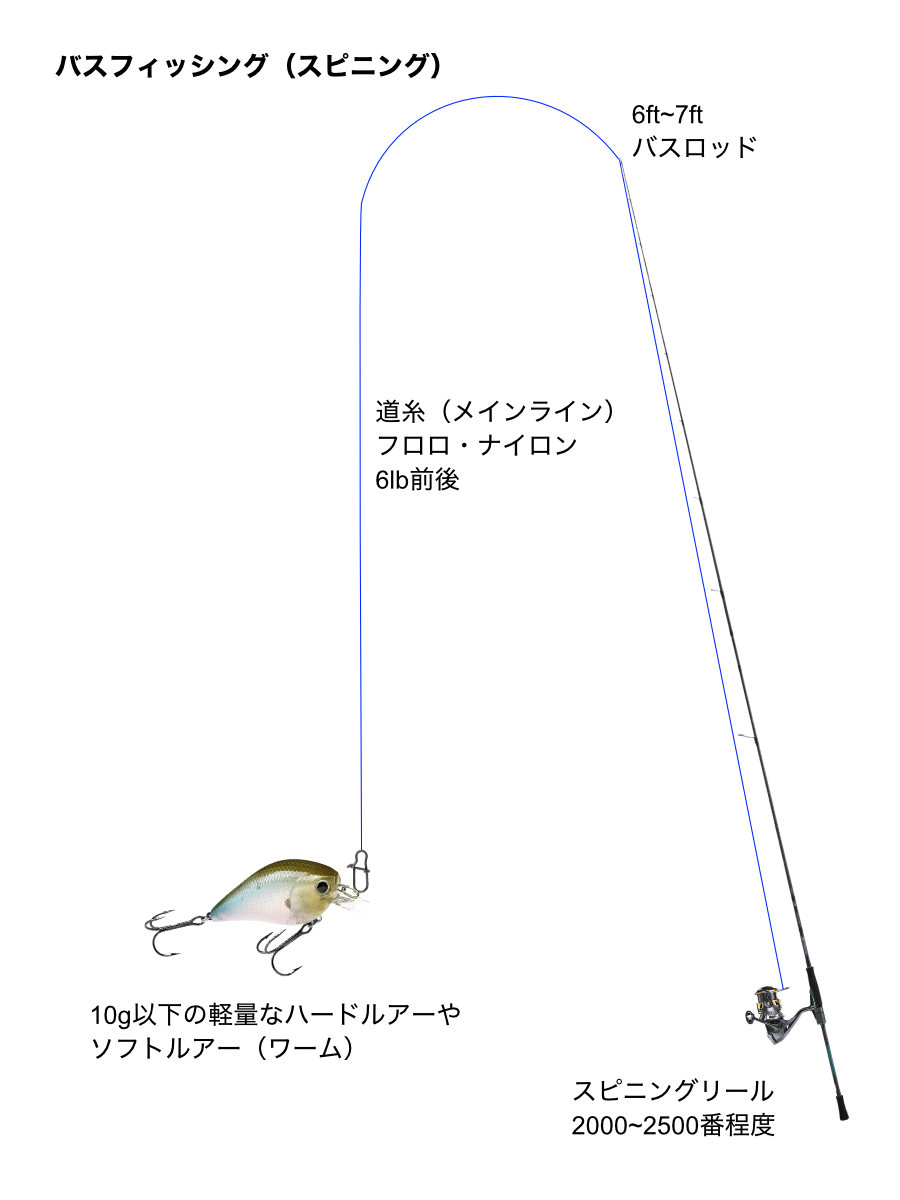
Basic Structure of the Rig
- Tackle: A 2000–2500 size spinning reel is ideal, paired with a rod around 6–7 feet long.
- Line: For beginners, 3–6lb nylon line is recommended because it is flexible and less prone to line trouble. For higher sensitivity and clearer detection of bottom contact and bites, low‑stretch fluorocarbon line is also commonly used.
- Lures: Spinning tackle is best suited for lightweight lures under 10g.
Hard Lures — Small crankbaits, spinnerbaits, and shads are typical choices.
Soft Lures (Worms) — Used with rigs that combine hooks and sinkers. Common spinning‑friendly rigs include the no‑sinker rig, downshot rig, and jighead rig.
Fishing Procedure
- Preparation & Drag Adjustment: Attach the reel to the rod and thread the line through all guides. Since spinning setups often use thin line, adjust the front drag so the line pulls out smoothly under strong tension to prevent breakage.
- Casting: After checking safety around you, perform an overhead cast.
Feathering — Lightly touch the spool edge with your finger just before splashdown to control distance and reduce splash noise. - Action (Luring): Operate the lure according to its type.
Steady Retrieve — Reel at a constant speed to swim hard lures or grub‑type worms.
Dragging / Bottom Pumping — After sinking the worm to the bottom, drag it sideways along the bottom or hop it gently.
Shaking — Shake the rod tip lightly to make the worm quiver by tapping the slack line. - Bite Detection & Hook‑set: When the line moves or you feel weight, it’s a sign of a bite. For hard lures, a reel‑set—reeling while pulling the rod back—is commonly used.
- Landing: Use the drag effectively during the fight to prevent line breakage. Once the fish is close, use pliers to safely remove the hook.
Related Movies
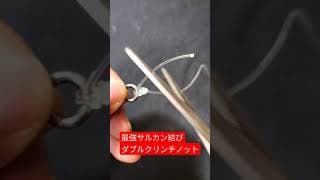
糸とアイの結び方(ダブルクリンチノット)

ブラックバス釣り教室
You have reached the end of the list