ロックフィッシュ(テキサスリグ)
💧 Salt🎣 Lure📍 Shore
Middle LureMedium-Heavy Lureアイナメカサゴクロダイヒラメマゴチ
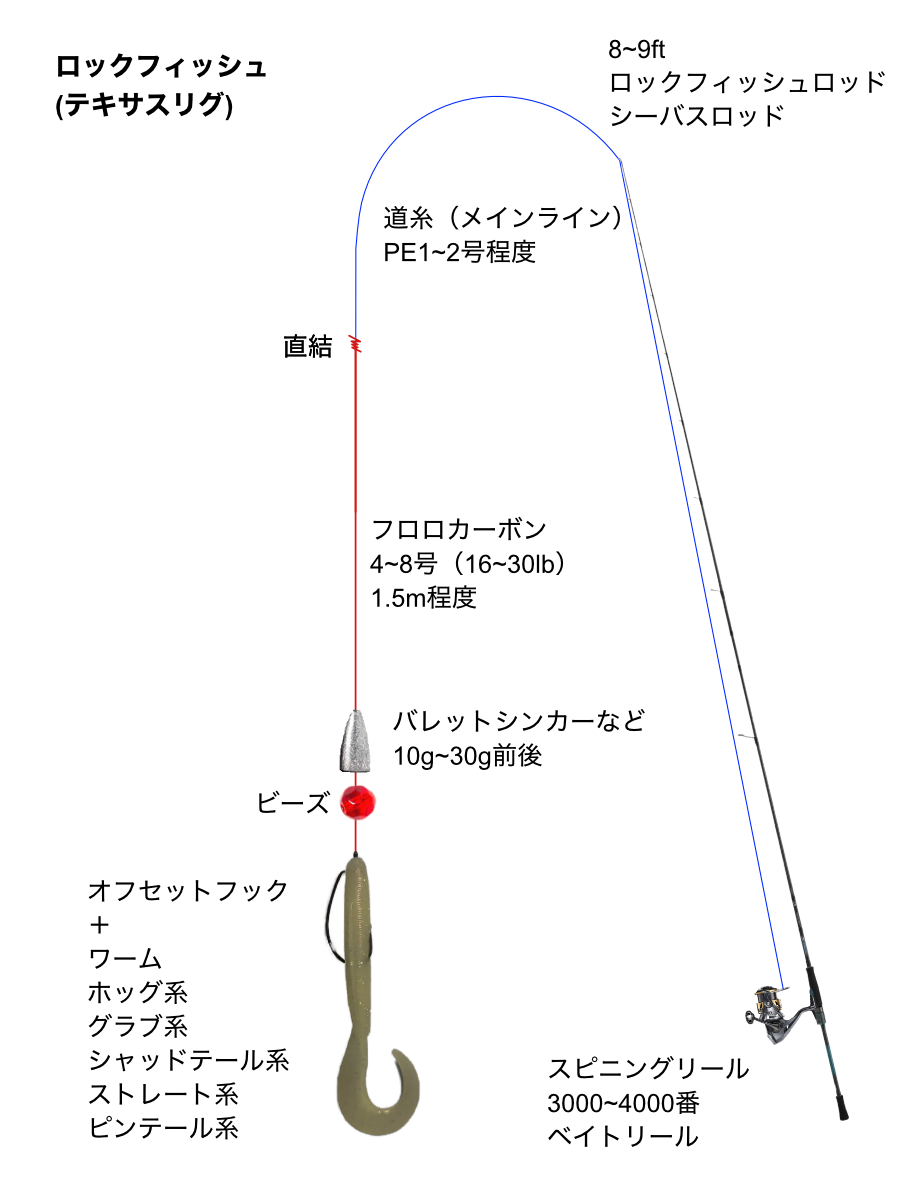
Basic Structure of the Rig
- Sinker: A bullet‑shaped “bullet sinker” is threaded onto the line. Materials include lead, high‑sensitivity tungsten, or brass, which produces a clicking sound that can attract fish.
- Beads: Adding a bead between the sinker and hook is recommended. It protects the knot and creates a clicking sound when it hits the sinker, adding extra appeal.
- Sliding System: Because the sinker is not fixed and moves freely along the line, it flies ahead during casting and reaches the bottom first. The worm then follows with a delayed, natural fall—one of the Texas rig’s key advantages.
- Offset Hook: The hook point can be hidden inside the worm, allowing you to fish tightly around rocks and vegetation with minimal snagging.
Fishing Procedure
- Casting and Bottom Contact: Cast the lure and always let it sink to the bottom first. Allowing it to fall freely (free‑fall) without tension helps it sink vertically.
- Lift & Fall: Lift the rod to raise the lure off the bottom, then let it fall again. Most rockfish bites occur during this fall.
- Swimming (Steady Retrieve): After letting the lure hit bottom, reel it up through the mid‑range at a steady speed, then let it fall back down. Repeat the cycle.
- Bottom Bump: Tap the lure along the bottom with small rod movements. This is effective when fish are feeding on crustaceans like crabs or shrimp, or when activity is low.
- Feeding Pause: After an action, slightly loosen the line to create slack. This separates the sinker and worm, producing a more natural fall that encourages fish to bite.
- Landing: The first few seconds after the hook‑set are critical. Pull the fish away from the rocks immediately to prevent it from diving into cover.
Related Movies
糸とアイの結び方(ダブルクリンチノット)
糸とアイの結び方(漁師結び)
糸と糸の結び方(FGノット)
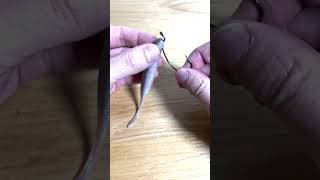
オフセットフックの刺し方
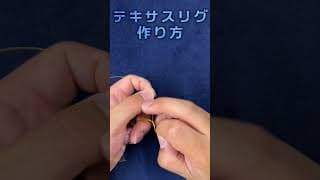
テキサスリグの作り方
You have reached the end of the list