シーバス・フラットフィッシュ(メタルジグ)
💧 Salt🎣 Lure📍 Shore
Middle LureMedium-Heavy Lureサワラブリヒラメマゴチスズキ
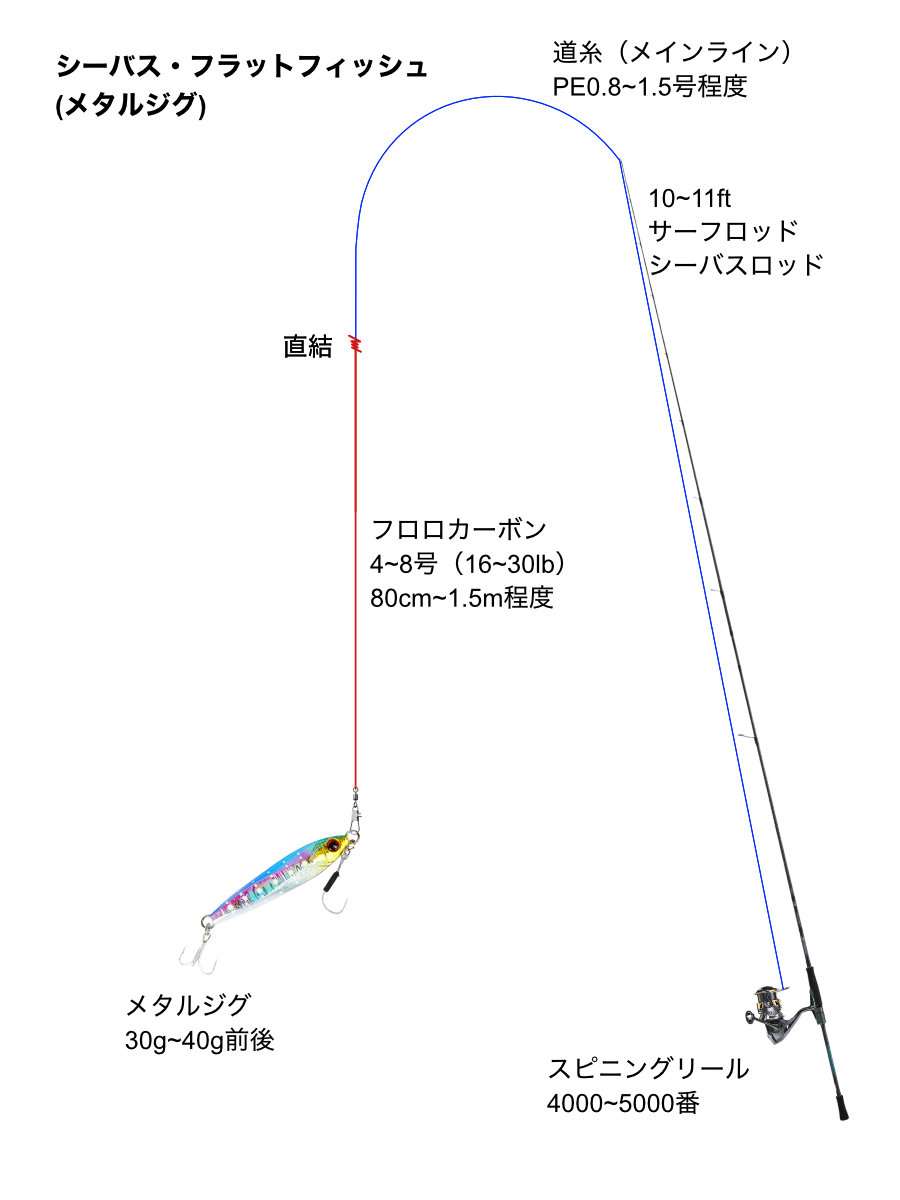
Basic Structure of the Rig
- Rod: Long rods around 10–11 feet are standard. Medium (M) to Medium‑Heavy (MH) power rods are ideal, offering long‑distance casting with minimal effort while maintaining both sensitivity and strength. Dedicated surf rods or seabass rods are recommended.
- Reel & Main Line: Use a 4000–5000 size spinning reel with PE line from 0.8–1.5号.
- Leader: Connect about 1.5m of fluorocarbon leader to the main line using a strong knot such as the FG knot, and attach a snap for easy lure changes.
- Metal Jig: 30–40g jigs are the standard. Choose between slow‑fall types for gentle sinking or rear‑weighted types for long casts and fast descent depending on current and depth.
- Safety Gear (Essential): Because surf fishing involves sudden waves, wearing a life jacket, waders, hat, and polarized sunglasses is strongly recommended.
Fishing Procedure
- Casting and Bottom Contact: Cast toward breaks (sudden depth changes) or promising areas and always confirm bottom contact. However, dragging the jig too long on the bottom can cause snags, so begin your action immediately after touching down.
- Basic Action (Slow Jigging): Lift the rod to raise the jig, then momentarily release tension to let it fall. This brief slack causes the jig to turn sideways, creating a feeding pause. During the fall, the jig rolls and flutters, strongly appealing to fish.
- Bite and Hook‑set: Bites often occur right after lifting the jig or during the fall, felt as a sharp “thud.” Lift the rod firmly to set the hook.
- Observing the Surroundings: Watch for changes on the water surface (tide lines, ripples) and observe other anglers’ catches to identify when and where fish are moving in.
Related Movies
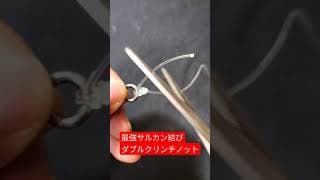
糸とアイの結び方(ダブルクリンチノット)
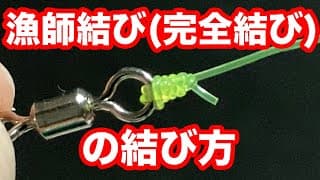
糸とアイの結び方(漁師結び)
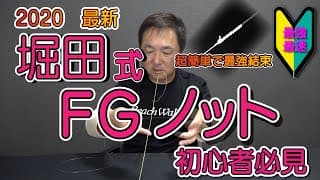
糸と糸の結び方(FGノット)
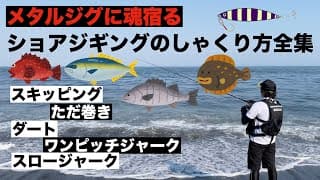
ショアジギングのしゃくり方
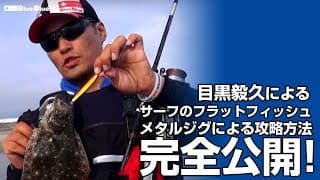
フラットフィッシュでのジグの動かし方
You have reached the end of the list